

Most B2B website redesigns fail before they begin because of things like briefs that say "modernize the look," an agency that delivers a new homepage and a six-month timeline that has you back in the same meeting asking why pipeline hasn't moved. The problem isn't the design. It's that the redesign was never scoped as a revenue project.
Here's the process that actually changes outcomes.
A successful B2B website redesign process starts with strategy, not wireframes. The companies that see real results define buyer intent, messaging hierarchy, and conversion goals before a single page is designed. The typical failure pattern is the reverse: visual decisions made before the strategic foundation is in place, with design and development teams working in separate lanes and handing work off instead of building together. A redesign that moves pipeline treats the website as revenue infrastructure, not a brand refresh.
Why most B2B website redesigns fail (it's not the design)
Talk to any marketing leader who's been through a website redesign that didn't deliver. The story usually goes the same way: the design looked great at launch, the team celebrated, and then nothing changed. Traffic stayed flat. Demo requests didn't spike. Sales still couldn't point prospects to the site with confidence.
The design was rarely the problem. The issue is almost always one of three things.
- The project started with aesthetics, not strategy — goals like "look more enterprise" or "feel more modern" aren't goals, they're vibes.
- Design and dev were separated, meaning quality degrades at every handoff and what looked intentional in Figma becomes approximated in code.
- And the sales team wasn't in the room, despite having spent thousands of hours watching prospects hesitate, object, and disengage.
A B2B website redesign done right is a revenue project, not a creative one. According to Gartner's research on the B2B buying journey, buyers spend only 17% of their total purchase time talking to vendors — which means your website is doing the selling in 83% of the buying cycle. The creative work is in service of the revenue goal.
Phase 1: Strategy before anything else
The first phase of a B2B website redesign has nothing to do with design. It's about getting clear on three things: who the site is for, what you want them to do, and what's in the way right now.
Before anything else, audit your actual closed-won customers from the last 12 months. What titles bought? What company sizes? What was the consistent objection before they signed? That data shapes your IA, your messaging hierarchy, and your CTA strategy more than any persona template will.
Before touching the site, set up heatmaps, scroll tracking, and session recordings on your highest-traffic pages. Run a technical SEO audit. Pull your top exit pages and your worst-converting high-traffic pages. This isn't optional pre-work — it's the brief. A structured website audit before redesign is the fastest way to identify the highest-impact fixes.
Schedule interviews with your top salespeople and ask two questions: what does the website do well for you in the sales process, and what would you be embarrassed to show a prospect? The answers will reframe your entire project scope.
A redesign brief without measurable goals is a creative brief, not a business one. Set specific targets: demo requests per month, homepage-to-contact conversion rate, time-on-site for qualified visitors. You'll use these to evaluate every design decision and to measure success at 30, 60, and 90 days post-launch.
Phase 2: Architecture and messaging before wireframes
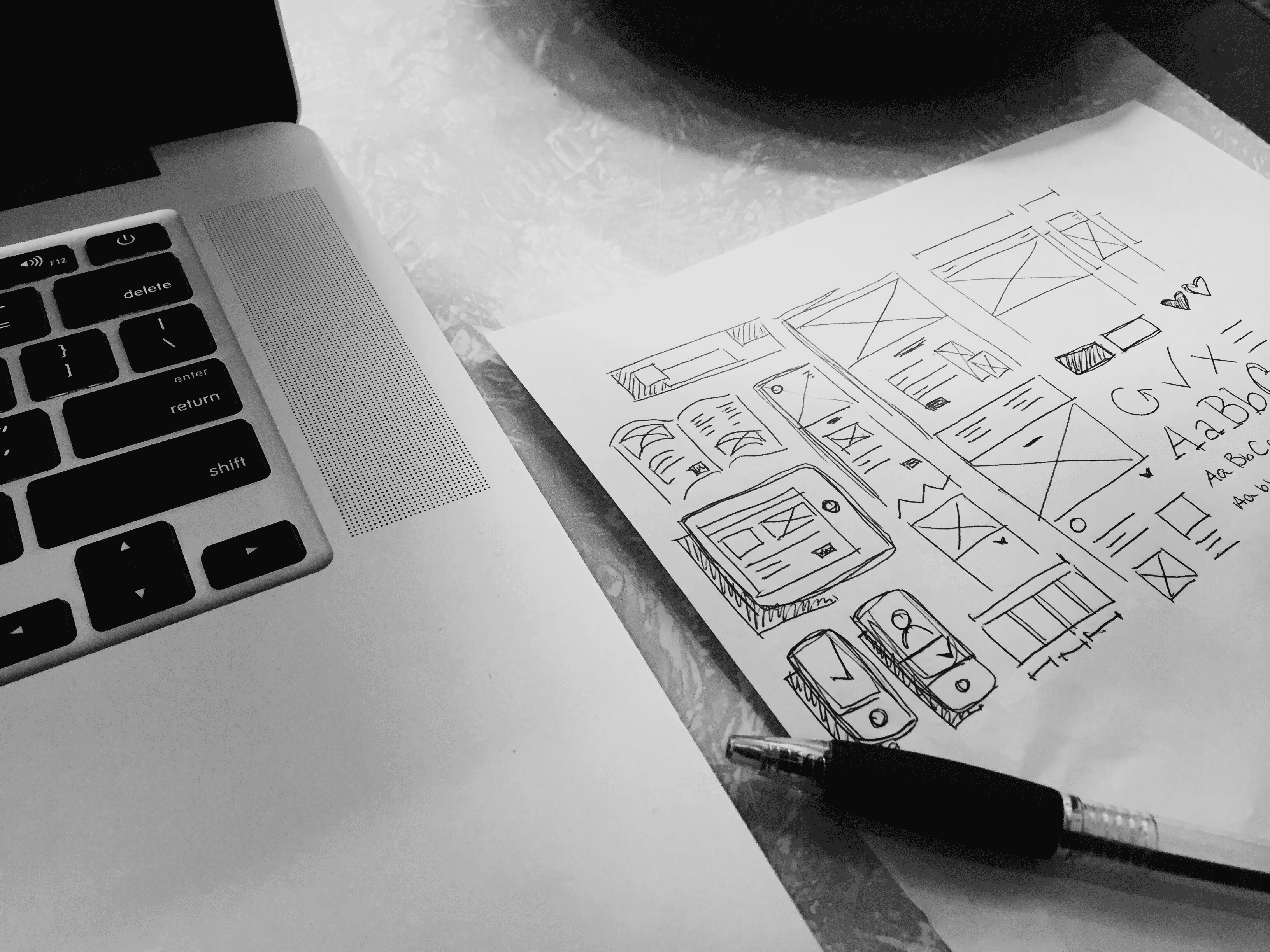
Most teams jump straight to wireframes after kickoff. That's backwards. Wireframes are a visual language, and if you don't have agreement on what the site needs to say and how pages should connect, you'll spend weeks revising wireframes for structural reasons that should have been settled in a document.
Your messaging hierarchy is the skeleton everything else hangs on. For B2B tech companies, this usually means a homepage that leads with the problem you solve (not the product you've built), solution pages that speak to specific roles and stages, and a case study section that connects outcomes to the buyer's job title.
Forrester's 2025 B2B predictions confirm that more than half of large B2B transactions will be processed through digital self-serve channels — which means your IA needs to serve the champion building internal consensus, the technical evaluator running a security review, and the economic buyer landing on your pricing page at 10pm. If your navigation is organized around your internal structure instead of their questions, you're creating friction you can't see.
Every page needs a clear primary action and a secondary fallback. Decide these in advance: which pages go to demo request, which go to content download, which go to pricing. Build a simple conversion map that the entire team agrees on before wireframes start.
Phase 3: Design and development under one roof
This is where most B2B website redesigns fall apart structurally. The design is handed off to dev. The dev team reinterprets it. The final product looks like a lower-resolution version of the approved mockups, with interaction details missing and responsive behavior improvised.
The fix isn't better handoff documentation. The fix is not having a handoff at all. When design and engineering work together in the same workflow from the start, developers flag technical constraints before they become post-design surprises, designers learn what's expensive to build and adjust before it's built, and the site that launches actually reflects the site that was approved.
For B2B tech companies specifically, this matters more than it does for a brochure site. You're likely building on a headless CMS, running personalization, integrating with a CRM, and needing a site that your marketing team can actually edit. Those requirements shape design decisions — they need to be in the room at the same time.
When evaluating a redesign partner, ask: do designers and developers collaborate throughout the project, or is there a handoff? Can you show me production code from past projects, not just design mockups? What's your process for performance and SEO during build, not after launch? If the answer to the first question involves the phrase "detailed handoff documentation," that's your signal.
Phase 4: Launch is not the finish line
A website launch is a data event, not a completion event. Set up your analytics before launch, not after — you want to capture baseline performance data the moment the new site goes live. Track conversion rate by page, traffic by channel, scroll depth on key pages, and form abandonment rate.
Keep in mind that no redesign ships perfectly. Build a 30-day review into the project timeline where you look at heatmaps, session recordings, and conversion data and make specific, targeted changes. This isn't scope creep — it's how sites actually get better.
If you're migrating to a new CMS or restructuring your URL architecture, your SEO work happens before and during development, not as an afterthought. Map every URL that has existing traffic or backlinks and ensure redirects are set up and tested before the new site goes live. A redesign that tanks your organic traffic for six months while things "settle" is a redesign that cost you pipeline. Ground this work in UX research best practices to ensure post-launch iterations are driven by user behavior, not guesswork.
What a realistic B2B website redesign timeline looks like
A mid-size B2B tech website (30-60 pages) typically runs eight to 16 weeks from strategy kickoff to launch. Weeks 1-3 cover strategy, audit, messaging hierarchy, and IA. Weeks 4-7 handle wireframes, design direction, and stakeholder review. Weeks 8-12 run design production and development in parallel. Weeks 13-15 cover QA, CMS build, redirects, and pre-launch testing. Week 16 is launch, monitoring, and first performance review.
That timeline compresses when design and development run in parallel rather than sequentially. It expands when stakeholder approval cycles are undefined, content delivery is late, or scope changes mid-build. The single biggest schedule killer in B2B website projects is content — have a content plan and a content owner locked before kickoff.
Not sure if you need a full redesign or a targeted refresh? Read our guide on when to rebrand vs. redesign your B2B website to help scope the right project.
Ready to build a site that actually converts?
A B2B website redesign done right is a pipeline investment. BRIGHTSCOUT helps growth-stage B2B tech companies redesign websites with design and engineering under one roof — no handoffs, no translation loss, and a process built around conversion, not aesthetics. Using our ReadyGo velocity framework, we deliver pages in under five days and full sites on timelines that don't require clearing your calendar for six months.
If your site isn't doing the work it should be doing, let's talk about what's in the way.
FAQs
How long does a B2B website redesign take?
A typical B2B website redesign takes 10 to 16 weeks from strategy kickoff to launch, depending on site size and complexity. Companies with clearly defined goals, approved messaging, and a dedicated content owner tend to ship faster. The most common delay is late-stage content delivery, which can add four to six weeks to any project.
What should be included in a website redesign brief?
A strong website redesign brief includes your ICP and buyer journey, specific conversion goals with baseline metrics, messaging hierarchy for core pages, competitive context, technical requirements (CMS, integrations, performance standards), and a clear stakeholder approval process. A brief without measurable goals is a creative brief, not a business one.
How do you avoid losing SEO during a website redesign?
Protect SEO by auditing every URL with existing traffic or backlinks before the redesign starts, mapping all URLs to their redirects, and building the redirect plan before development is complete. Run a crawl of the new site in a staging environment before launch to catch broken links and missing meta tags. Don't wait until after launch to address SEO.
Should you redesign or refresh your B2B website?
A refresh makes sense when your information architecture is sound, your messaging is strong, and you're making targeted visual or CRO improvements. A full redesign is warranted when your ICP or positioning has shifted, when the site can't be edited without developer support, or when structural changes to navigation or page templates are needed. If you're effectively rebuilding most of the site anyway, call it a redesign and scope it accordingly.
What's the most common B2B website redesign mistake?
The most common mistake is starting with design before strategy is set. This produces beautiful sites that don't convert because the messaging wasn't validated, the IA doesn't map to buyer journeys, and no one agreed on conversion goals before the wireframes were drawn. Design is a multiplier. Without a strong strategic foundation, it multiplies the wrong things.