

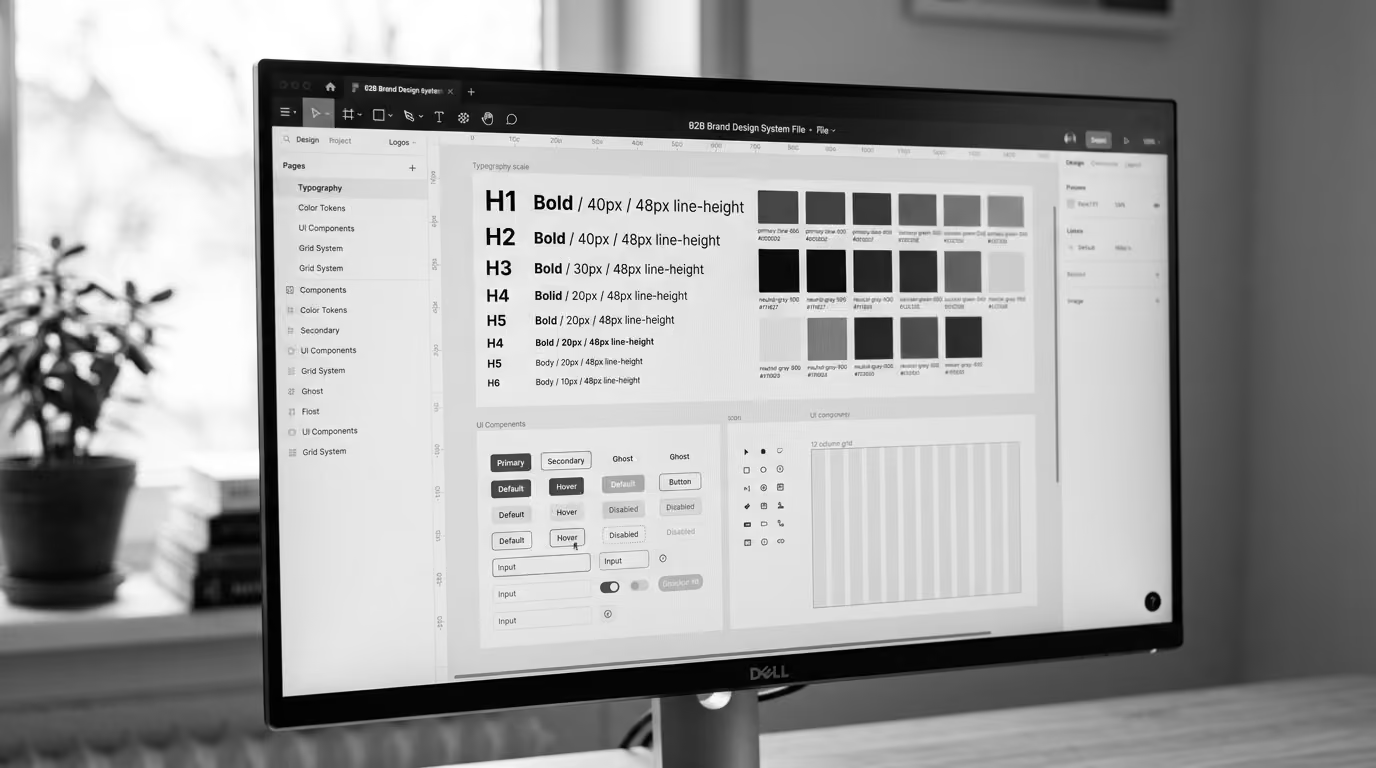
Most B2B companies think they have a brand system. What they actually have is a brand guide — a PDF that lives in a shared folder, gets referenced once during the rebrand, and is quietly ignored by the time the second campaign launches.
A brand guide documents decisions. A brand system operationalizes them. The difference determines whether your brand scales with your company or fragments as it grows.
A B2B brand system is the complete infrastructure that enables a company to express its brand consistently across every touchpoint — from marketing to product to sales. It includes visual identity (logo, color, typography, illustration), messaging architecture (positioning, voice, core narratives), and the governance and tooling that makes consistent execution possible for teams who weren't in the room when the brand was built. A logo is an asset. A brand system is a capability.
What a B2B brand system actually includes
A real B2B brand system has three layers — and most companies only build the first one.
Layer 1: Visual identity. Logo, color system, typography, iconography, illustration style, photography direction, and motion guidelines. This is what most people mean when they say "brand." It's necessary but not sufficient.
Layer 2: Messaging architecture. Positioning statement, value proposition, key messages by persona, tone of voice guidelines, and the core narratives that show up in marketing, sales, and product. This is the layer that makes your brand sound consistent, not just look consistent. According to Gartner's research on B2B buyer trends, 98% of B2B buyers read reviews and research independently before making purchasing decisions — which means your messaging needs to be consistent across every channel they encounter, not just the ones you control.
Layer 3: Governance and tooling. Brand templates in the tools your team actually uses (Figma, Canva, Google Slides, Notion). Approval workflows for brand-adjacent content. Documentation that's findable and usable by someone who didn't go through the rebrand. An internal champion who owns brand consistency. This is the layer that determines whether the system gets used or ignored.
Building all three layers is what separates a brand that scales from a brand that drifts.
Why B2B brand systems fragment as companies grow
Brand fragmentation in B2B companies follows a predictable pattern: the brand is built during a rebrand or launch, guidelines are documented and everyone agrees the new brand is the right direction. Six months later, the sales team has their own deck template, the product team has their own design language, and the marketing team is running campaigns that feel disconnected from both.
This happens because most brand systems are built as reference documents, not operational tools. A 60-page brand guide is comprehensive, but it's not usable by a demand gen manager who needs to ship an ad in two hours. A Figma file full of components is complete, but only if your marketing team knows Figma.
The practical solution is to meet your team where they work. Templates in Google Slides for the sales team, Canva templates for marketing, Figma components for designers and Notion documentation for writers. The brand system should reduce the effort required to be on-brand, not increase it.
Gartner's B2B buying research consistently shows that buyers encounter multiple touchpoints before making contact with a vendor. If those touchpoints feel like they come from different companies — because the brand system wasn't operationalized across teams — the cumulative trust-building effect is lost.
The characteristics of a B2B brand system that actually gets used
It's modular, not monolithic. Teams can find and use the specific component they need without reading the whole guide. The logo usage rules are one document. The messaging guidelines are another. The presentation templates are somewhere else. Each component is independently useful.
It accounts for scale. A brand system built for a 20-person company needs to be designed to work for a 200-person company. That means anticipating the contexts in which the brand will be used two years from now — new product lines, new markets, new teams — and building flexibility into the system from the start. For SaaS companies with expanding product suites, read our guide to B2B brand architecture for fast-growing companies to see how to structure brand systems that accommodate growth.
It's maintained, not archived. Brand systems that don't get updated become outdated, and outdated systems get ignored. Assign ownership. Build a lightweight update process. Make the system a living document, not a snapshot.
It connects visual identity to messaging. The most common failure in brand systems is disconnecting how the brand looks from how it sounds. A visual identity that communicates "premium enterprise" paired with copy that sounds like a startup blog creates cognitive dissonance for buyers. The brand system should specify how visual and verbal identity work together, not just how each works independently.
For a detailed breakdown of how to build the brand identity foundation that a system like this is built on, read our guide to building a high-impact B2B SaaS brand identity.
What a B2B brand system enables that a brand guide doesn't
The practical difference between a brand system and a brand guide shows up in how the brand performs over time.
Companies with real brand systems can onboard new team members to brand standards in days, not weeks. They can launch campaigns faster because templates reduce production time and can expand into new markets or product lines without the brand fragmenting. They can maintain consistency across a 75-person global team — across time zones and disciplines — because the system does the governance work that would otherwise require a dedicated brand manager reviewing everything.
Companies without a real brand system spend a meaningful portion of every campaign cycle rebuilding assets from scratch, correcting off-brand executions, and managing the downstream consequences of brand inconsistency — which, at the buyer level, erodes trust and makes every marketing dollar work harder for less.
Ready to build a B2B brand system that actually scales?
At BRIGHTSCOUT, we build brand systems that work for how B2B tech companies actually operate — across distributed teams, multiple touchpoints, and product roadmaps that evolve faster than most brand guides can keep up with.
Let's talk about what your brand system needs.
FAQs
What is a B2B brand system?
A B2B brand system is the complete infrastructure that enables consistent brand expression across every touchpoint — visual identity, messaging architecture, and the governance and tooling that makes consistent execution possible at scale. It's distinct from a brand guide, which documents decisions but doesn't operationalize them. A brand system is what makes your brand scalable, not just defined.
What's the difference between a brand guide and a brand system?
A brand guide documents how the brand should look and sound. A brand system provides the tools, templates, and workflows that make consistent execution possible for people who weren't part of building the brand. A brand guide is a reference. A brand system is infrastructure. Most B2B companies have the former and need the latter.
What should a B2B brand system include?
A complete B2B brand system includes: visual identity (logo, color, typography, illustration, motion), messaging architecture (positioning, voice, persona-specific messaging), and governance tooling (templates in the tools teams use, approval workflows, documentation, and an owner). Companies that only build the visual identity layer end up with a brand that looks consistent but sounds inconsistent.
How do you maintain brand consistency across a growing team?
Brand consistency at scale requires three things: tooling that reduces the effort to be on-brand (templates in the tools teams actually use), governance that catches drift before it compounds (a designated brand owner and lightweight review process), and documentation that's findable and usable without context from the original rebrand. Most brand fragmentation happens not because teams are careless but because the system makes it too hard to be consistent.
When should a B2B company invest in a brand system?
The best time is during or immediately after a rebrand, when brand decisions are fresh and can be systematized before adoption patterns form. The second-best time is when the brand is clearly fragmenting — when different teams are executing the brand differently, new hires can't find authoritative brand resources, or campaigns are feeling inconsistent across channels. If you're seeing those signals, the investment in a system will pay back quickly in reduced production costs and more consistent buyer experiences.