


9 Best B2B Payload Websites: Real Examples That Deliver Results
Choosing a CMS feels like a business decision that will haunt you for years. Pick wrong and you're stuck with slow development cycles, frustrated developers, and a marketing team that can't update content without opening tickets.
Payload CMS has become the go-to headless CMS for B2B companies that need flexibility without sacrificing developer experience. Unlike traditional CMS platforms that force you into rigid structures, Payload CMS gives you a TypeScript-first foundation that developers actually enjoy using. You can deploy to your own server infrastructure, controlling your data and database completely. The API-first architecture lets you build exactly what your business needs with better speed and performance than legacy systems. Frontend teams appreciate the clean separation between content management and presentation layers, while built-in scalability handles growth without configuration headaches.
This open source headless CMS represents a new era of content management. You get complete code access, robust security, and the technical expertise to customize every aspect of your tech stack. The platform supports extensive customization with a fully customizable admin interface that adapts to your workflow. Content templates you can reference across projects adapt to your needs rather than forcing your content into predetermined structures. Teams building web apps and mobile apps benefit from the consistent API architecture.
But theory only takes you so far. You want to see real companies using Payload CMS to solve real problems. Companies managing thousands of blog posts, processing millions of transactions, and building sophisticated platforms without relying on fragile plugin ecosystems. Organizations deploying complex web apps and mobile apps that require robust content management with one click publishing workflows.
This post showcases nine B2B websites built on Payload. Each demonstrates practical applications of the platform across different industries and use cases. You'll see how companies leverage Payload's flexibility to create fast, maintainable websites that serve their business goals.
Best B2B Websites Built on Payload CMS
These nine B2B companies demonstrate how Payload CMS enables sophisticated digital experiences without sacrificing technical control or developer experience. Each implementation showcases the platform's flexibility for managing complex data structures and user roles.

1. DatologyAI
DatologyAI offers AI companies a data curation platform that automatically identifies and prioritizes the highest-value training data. Their Payload-powered site showcases how they help machine learning teams train better models faster while reducing compute costs. The clean, technical presentation demonstrates core value propositions through clear messaging: train models 10x faster at one-tenth the cost by eliminating low-quality training data. The site effectively communicates complex AI infrastructure services to a technical B2B audience.
What makes it work: The site balances technical depth with accessibility. Developers understand the architecture while decision-makers grasp the business impact immediately. Payload's headless CMS architecture provides the flexibility to model content around complex AI datasets. Teams can deploy changes rapidly without waiting on complex approval workflows. Using iterative development approaches helps teams build and refine features efficiently. The admin dashboard requires minimal configuration to handle sophisticated data structures, letting the project team reference existing patterns while focusing on features rather than CMS setup.

2. DocShield
DocShield simplifies malpractice insurance for medical practices through automation and data integration. Their Payload site delivers a streamlined user experience that reflects their core promise: completing insurance applications in 15 minutes by pre-filling 70% of forms using NPI numbers and integrated data sources. The site targets physicians and medical practices with clear messaging about faster quotes, painless renewals, and affordable coverage without traditional insurance hassles. The platform manages sensitive medical data with robust security protocols built into the Payload CMS setup.
What makes it work: The design removes friction at every step. Content updates happen quickly to reflect changing insurance regulations and provider networks. The headless CMS architecture provides support for rapid content changes without developer intervention. Admin users can index and organize policy documents efficiently. Form templates streamline the application process while content configuration adapts to different medical specialties. The platform handles document management for policy files and compliance materials without complex server configuration.

3. Microsoft Designer (create.microsoft.com)
Microsoft uses Payload CMS to power its AI-driven design tool, Microsoft Designer. The site showcases how enterprise-scale companies leverage Payload for critical content infrastructure that demands flexibility, data ownership, and rapid content operations. Built with TypeScript (Microsoft's own language), the implementation demonstrates Payload's ability to handle next-generation thinking behind revolutionary design tools powered by OpenAI's DALL-E, delivering streamlined content production for a global audience. Microsoft's technical expertise shines through in their custom code integrations and security implementations.
What makes it work: The implementation proves Payload scales to enterprise requirements. Microsoft chose Payload CMS for developer experience, data ownership, and the ability to avoid vendor lock-in while maintaining server control. You can expect the same level of reliability when you deploy Payload to your infrastructure. The open source foundation allows Microsoft to audit code and customize their tech stack precisely. Custom UX design for enterprise applications ensures tools remain accessible while handling complex functionality. Frontend developers building design apps work independently from backend teams thanks to the API-first architecture. Enterprise-scale projects benefit from Payload's configuration flexibility and extensive customization options without sacrificing performance.
4. Releese
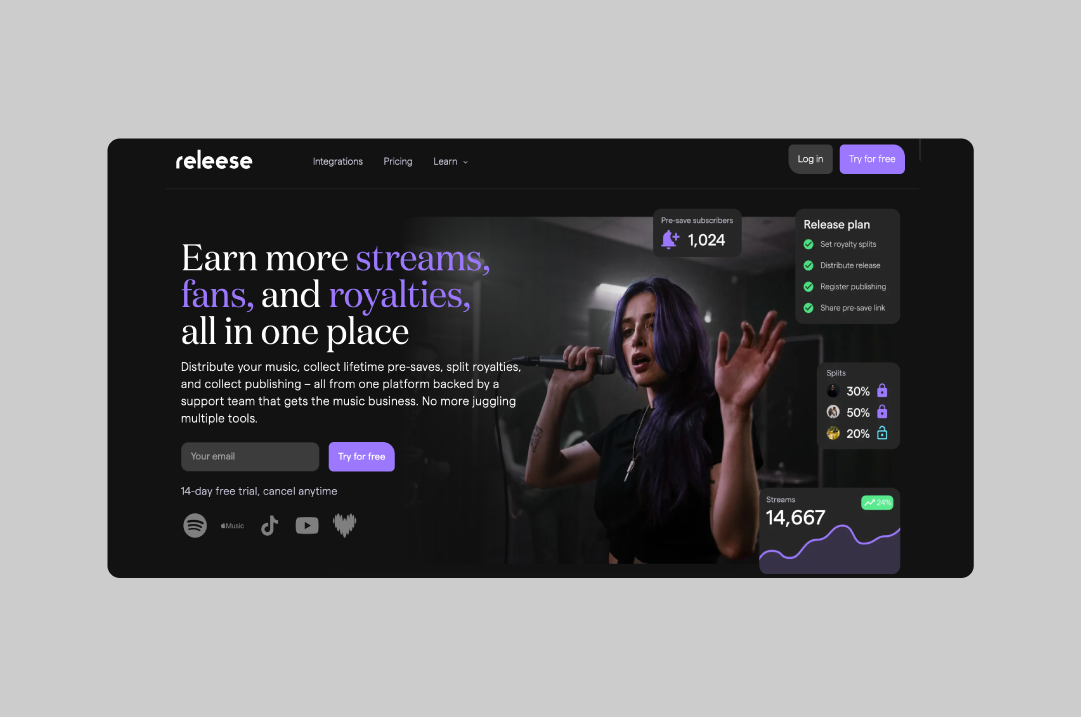
Releese consolidates music distribution, royalty collection, and artist growth tools into a single platform for independent musicians and labels. Their Payload-powered site handles complex workflows that span distribution to streaming platforms, lifetime pre-save subscriptions, automated royalty splits, and publishing rights collection. The platform targets indie artists and labels who need more than basic distributionâ€â€offering 24/7 support, playlist pitching, and analytics that track which playlists and influencers drive new fans. Payload's flexible user roles system allows different access levels for artists, managers, and label administrators.
What makes it work: The site manages intricate data relationships between artists, releases, collaborators, royalty splits, and multiple revenue streams while keeping the user experience simple. Payload's flexible content modeling handles these complex business rules without forcing Releese into rigid structures that would limit their ability to serve diverse artist needs. The headless CMS approach provides resources for developers to create custom integrations with streaming apps and services. Teams can deploy new features without disrupting existing workflows. Content templates for different release types streamline project workflows while configuration options adapt to each artist's unique requirements. Artists can reference historical performance data to optimize future releases.
5. First Street Foundation
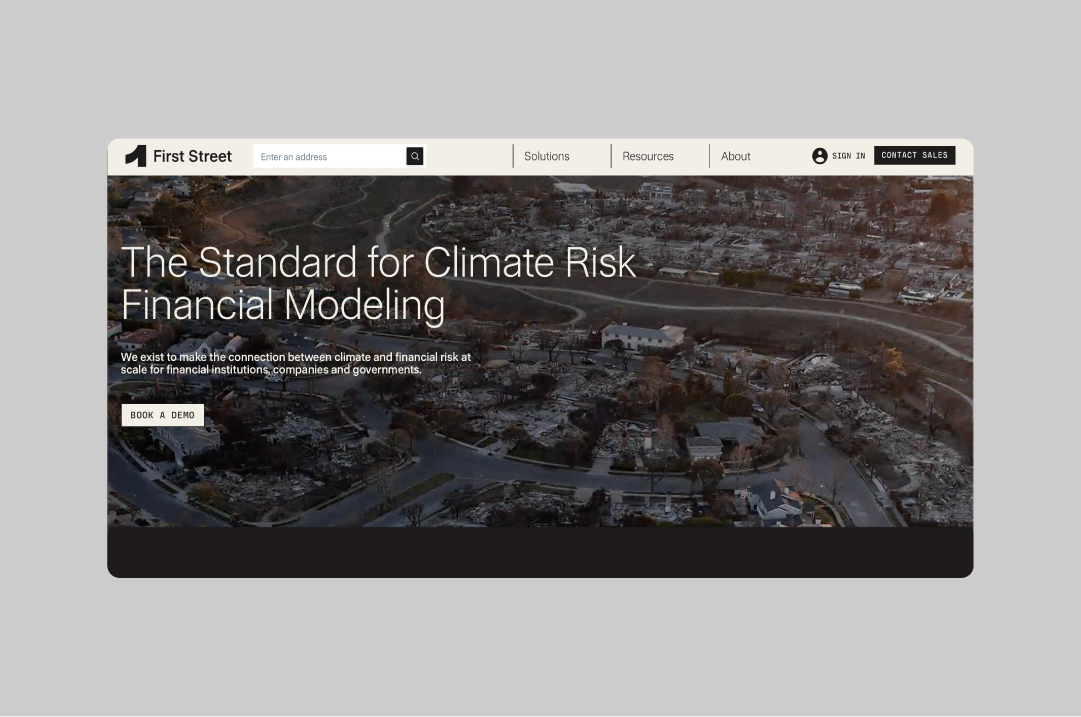
First Street Foundation connects climate science to financial risk through property-level climate modeling. Their Payload-powered platform delivers flood, wildfire, heat, wind, and air quality risk assessments for every property in the United States. The nonprofit serves financial institutions, insurance companies, real estate firms, and government agencies that need transparent, peer-reviewed climate risk data to inform investment decisions. Their Risk Factor tool provides free public access to residential property data, while Risk Factor Pro serves commercial real estate portfolios with detailed analysis that translates complex climate science into business terms. The platform's database architecture efficiently handles billions of data points, using smart indexing strategies and distributed server infrastructure to maintain query speed at scale.
What makes it work: The site handles massive datasets while presenting sophisticated climate projections in formats that B2B decision-makers can act on. Payload's flexibility allows First Street to serve both public awareness missions and enterprise data needs through the same platform, managing everything from simple property lookups to complex portfolio analytics without compromising on either experience. The open source CMS foundation provides the technical expertise needed to optimize database queries and index operations for performance. Teams can deploy updates to both public-facing web apps and enterprise tools from the same codebase. Report templates generate standardized documents for different property types while configuration settings adjust data presentation for various user roles. The project architecture scales to billions of data points without performance degradation.

6. Paper Triangles
Paper Triangles creates augmented reality experiences for social platforms, serving consumer brands that need immersive mobile campaigns. Their Payload-powered site showcases AR work for clients like McDonald's, Netflix, Toyota, and IWC watches across Snapchat and Facebook platforms. The agency team blends 3D animation, motion graphics, and storytelling into campaigns that drive brand engagement through interactive lenses and filters. The site demonstrates technical capabilities while letting visitors try AR experiences directly through embedded Snap AR Camera integration. The team's technical expertise shows in their custom code implementations.
What makes it work: The portfolio needs to display complex 3D work, video content, and interactive AR previews without sacrificing load times or mobile performance. Payload's media handling and flexible content structure let Paper Triangles showcase technical work that brings brands into augmented reality while maintaining the fast speed and responsive experience that reflects their creative expertise. Building strong brand identity through immersive experiences helps their clients stand out in competitive markets. The headless CMS architecture provides better performance for media-heavy content across mobile apps and web platforms. Frontend optimization techniques pair with backend efficiency to deliver smooth user experiences. Project templates for different campaign types accelerate client work while maintaining creative flexibility.
7. Bizee
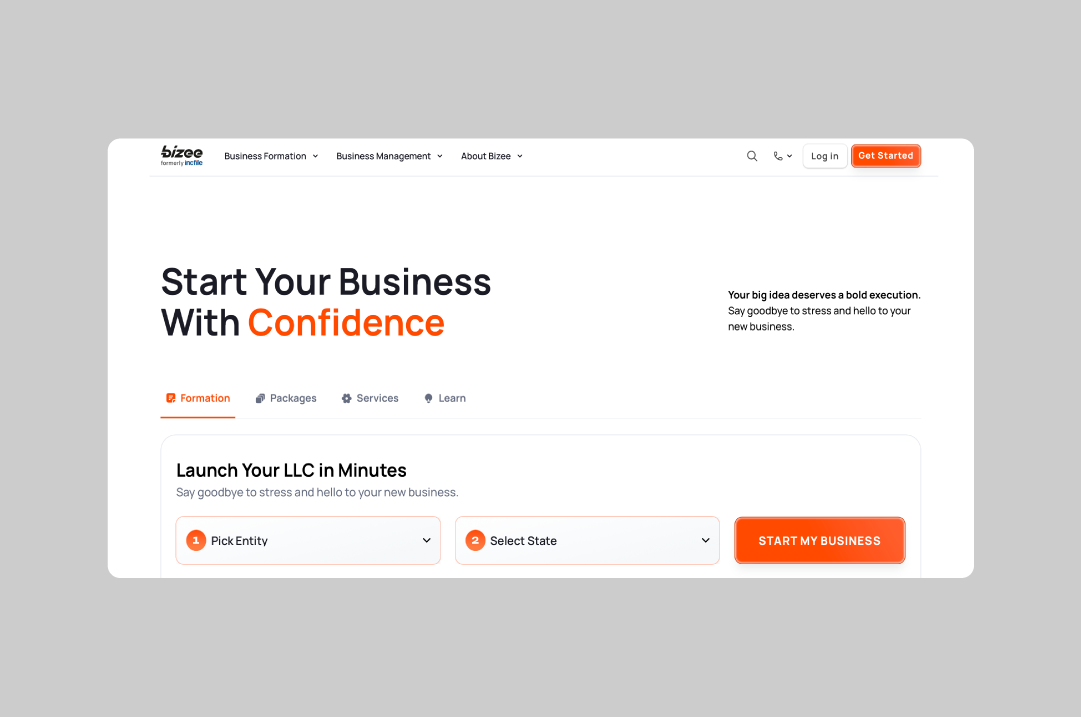
Bizee simplifies business formation for entrepreneurs launching LLCs, S-Corps, C-Corps, and nonprofits. Founded in 2004, the company has helped form over one million businesses across all 50 states. Their Payload site guides users through complex multi-step formation processes while managing state-specific requirements, filing fees, and processing timelines. Services include registered agent representation (free first year with formation), EIN obtainment, operating agreements, compliance notifications, virtual address solutions, and trademark registration. The platform serves everyone from solo freelancers to growing startups, offering three package tiers starting at $0 plus state fees. Customers only pay for the specific services they need without hidden costs. Each formation journey adapts based on the user's state selection and entity type, presenting only relevant information and requirements while hiding unnecessary complexity. The team leveraged Payload CMS to create dynamic forms that adapt in real time. Admin users can deploy content updates across all 50 state-specific variations with one click.
What makes it work: Business formation involves intricate state-specific rules that change constantly. Bizee's Payload implementation handles this complexity through flexible content modeling that adapts forms, pricing, timelines, and guidance based on user selections. The CMS manages 50+ state-specific content variations without requiring separate builds, keeping legal information current across jurisdictions while maintaining fast processing speed and personalized user experiences. This open source tech stack provides the flexibility to customize every aspect of the user journey. Document templates for operating agreements and filing paperwork adjust automatically based on entity type and state requirements. Project configuration adapts to each formation's unique needs with one click rather than manual intervention.
8. 2/90 Sign Systems
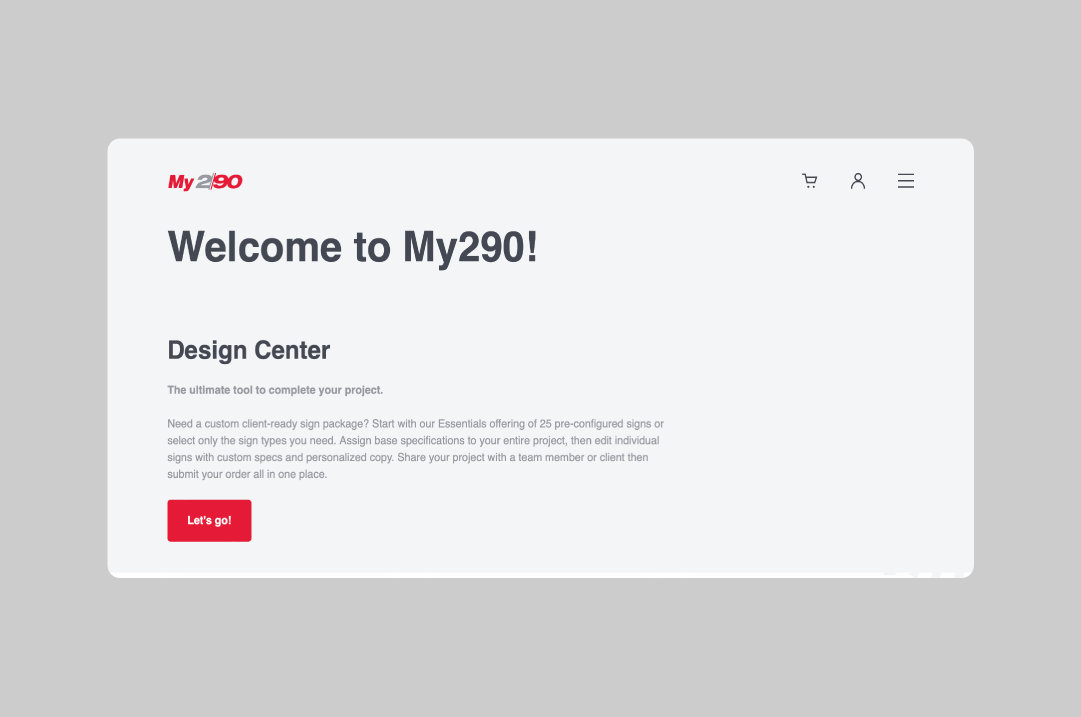
2/90 Sign Systems manufactures modular wayfinding signage for healthcare facilities, educational campuses, corporate offices, and government buildings. Founded in 1978, the company pioneered the modular sign industry with systems that adapt as organizations change. Their My290 platform transforms complex B2B ordering into an interactive design experience. Clients configure complete signage packages by selecting from product lines like Frame, Arc, Slide, and Klik systems, then customize dimensions, finishes, mounting options, copy, and fonts. Real-time SVG rendering displays realistic mockups as users interact with specifications. The system handles both pre-configured Essentials packages for quick ordering and fully custom configurations for unique requirements. Backend tools let dealers manage accounts, apply customer-specific pricing, review orders, and route specifications directly to manufacturing departments. The Payload CMS setup enables seamless integration between the configurator and manufacturing systems.
What makes it work: B2B product configurators demand sophisticated state management and real-time rendering without server round-trips. The My290 Payload implementation powers instant visual feedback as users modify specifications across multiple signs simultaneously. Payload's flexible content architecture manages complex product relationships, pricing rules, and account hierarchies while supporting the high-performance interactions that turn complicated specification processes into engaging design experiences. Admin users control access to pricing and manufacturing features based on account type. Design templates provide starting points for common signage projects, letting teams configure options with one click while configuration flexibility accommodates unique requirements. The platform handles project specifications from initial design through manufacturing without losing critical details.

9. Clock Limited
Clock Limited builds custom digital platforms for global brands across gaming, publishing, and the creator economy. The UK-based B-Corp agency leverages Payload to power membership platforms, loyalty programs, and subscription services that support over 400 million users monthly. Their client roster includes Mythical Society (Rhett & Link's fan platform), Critical Role, Wall Street Journal, Leicester Tigers RFC, and major gaming publishers like Riot Games and Epic Games. Clock specializes in complex integrations that connect Payload with payment processors, authentication systems, CRM platforms, and content delivery networks. Their work transforms content creators into subscription businesses, gaming franchises into engaged communities, and traditional publishers into member-driven organizations. Projects range from YouTuber monetization platforms (helping creators with 17M+ followers generate $4M+ in annual profit) to enterprise loyalty systems serving millions of subscribers. The agency has maintained relationships with some clients for over 12 years, continually expanding Payload-powered platforms as businesses scale. Their technical expertise in code optimization and security ensures platforms remain performant at massive scale.
What makes it work: Clock demonstrates Payload's enterprise capabilities at scale. Their implementations handle massive concurrent users, complex permission hierarchies, multi-tier membership structures, and sophisticated content access rules while maintaining the flexibility to evolve platforms over years of partnership. The open source foundation allows Clock to audit security code and create custom extensions. Ongoing support and resources from the Payload community help Clock push the boundaries of what's possible with the platform. The systems process millions of subscription transactions monthly while maintaining data integrity. Clock can deploy updates across multiple client apps simultaneously from a single server infrastructure. Clients pay only for actual usage rather than fixed platform fees. Project templates for common platform patterns accelerate new client implementations without sacrificing customization.
What These B2B Payload Websites Have in Common
The best B2B websites share key characteristics regardless of industry. They load with exceptional speed. They present information clearly. They respond flawlessly across devices. They make content updates easy for marketing teams without requiring developer intervention for every change. Admin users can deploy updates with one click rather than complex workflows.
Payload CMS enables these qualities without forcing you to compromise on technical sophistication. The TypeScript-first approach means your codebase stays maintainable as it grows. The flexible content modeling handles complex B2B requirements like multi-language support, granular permissions, and custom workflows. You can deploy to your own server infrastructure, keeping your data under your control and eliminating vendor lock-in concerns. Content templates accelerate development while maintaining flexibility for unique requirements. Frontend frameworks integrate seamlessly with Payload's API. Default configurations provide sensible starting points that teams can adjust to match their specific needs. Strong SEO capabilities help your content rank without requiring plugins. What matters most is the platform adapts to your workflow rather than forcing you into predetermined patterns. Teams building both web apps and mobile apps benefit from the consistent architecture.
This open source headless CMS gives you complete control over your tech stack. You can customize code, implement security measures tailored to your needs, and create integrations that traditional platforms don't support. The developer community provides resources and support for teams building with Payload. The platform handles everything from simple blog posts to complex e-commerce transactions without requiring separate systems. Payment transactions, content publishing, and user management all integrate seamlessly within the same architecture.
Your website isn't a brochure. It's a business tool that should accelerate growth, not constrain it. The companies featured here understand this reality. They chose Payload CMS because it lets them build exactly what their business needs without fighting their CMS at every turn. Measuring the business impact of platform decisions ensures your technical investments deliver lasting value.
Conclusion: Why B2B Companies Choose Payload CMS
These nine websites prove that Payload CMS delivers for B2B companies across industries and use cases. From AI infrastructure platforms to healthcare insurance solutions to enterprise design tools, Payload provides the technical foundation that modern B2B websites require. Companies process sensitive transactions, publish content posts, and manage complex workflows without the security risks and compatibility issues that plague plugin-heavy alternatives.
The pattern emerges clearly: companies choose Payload CMS when they need developer velocity without sacrificing control. The TypeScript-first architecture, flexible content modeling, and ability to deploy to your own server infrastructure solve problems that traditional CMS platforms create. The open source nature provides transparency and security that proprietary systems can't match. Teams building web apps and mobile apps benefit from the unified architecture and one click deployment workflows.
Teams with technical expertise appreciate having complete access to the code. They can create custom extensions, optimize database performance with strategic indexing, and implement security protocols specific to their requirements. The headless CMS architecture separates content from presentation, enabling teams to support multiple channels from a single content source. Teams can deploy updates across all platforms simultaneously. Projects stay maintainable over time without accumulating technical debt. Content creators publish blog posts and other materials without developer assistance while technical teams retain full control over functionality. Built-in SEO capabilities ensure content performs well in search without requiring additional tools.
Your website should enable your business strategy, not limit it. Payload CMS makes that possible by giving developers the tools they need and marketing teams the control they want. What matters most is building digital experiences that serve your business goals rather than fighting against platform limitations.
Ready to Build a B2B Website That Performs?
BRIGHTSCOUT specializes in building B2B websites that drive real business results. Our team has deep experience with Payload CMS and knows how to leverage its flexibility for complex B2B requirements. We bring technical expertise in headless CMS implementation, code optimization, and security best practices.
We understand the challenges B2B companies face. Long sales cycles. Multiple decision-makers. Technical products that require clear explanation. Websites that need to serve multiple audiences simultaneously. Our support extends beyond initial setup to ongoing optimization and feature development. Choosing the right agency partner ensures your platform investments deliver lasting business value.
Contact BRIGHTSCOUT to discuss your B2B website project. Let's build something that actually works.
FAQ: B2B Websites and Payload CMS
What makes Payload CMS a good choice for B2B websites?
Payload CMS combines developer-friendly features with business-focused capabilities. The TypeScript-first architecture means faster development and fewer bugs. You can deploy to your own server infrastructure, keeping your data under your control and eliminating vendor lock-in. The API-first design integrates cleanly with your existing tools and workflows. Flexible content modeling handles complex B2B requirements like multi-language support, granular permissions, and approval workflows without requiring custom development. Unlike platforms reliant on plugins for basic functionality, Payload provides core features out of the box. Default configuration settings get projects started quickly while allowing deep customization. Document management capabilities handle everything from blog posts to complex content hierarchies. SEO tools help optimize content for search engines without additional plugins. Admin users can manage both web apps and mobile apps from a unified interface with one click updates across platforms.
This headless CMS provides resources for teams at every stage. Initial setup guides help developers get started quickly. The open source community offers support through documentation, forums, and code examples. User roles can be configured precisely to match your organization's workflow. Security features protect sensitive business data while maintaining performance. Teams publish blog posts and update content without depending on plugins for basic functionality.
How does Payload compare to other CMS options for B2B websites?
Payload CMS sits between traditional CMS platforms like WordPress and enterprise systems like Adobe Experience Manager. It provides more control and flexibility than WordPress without the complexity and cost of enterprise platforms. When evaluating CMS options, consider platform flexibility, developer experience, and long-term business needs. Compared to other headless CMS options like Contentful or Sanity, Payload offers full code access, server control through self-hosting, and no content pricing tiers. You own your infrastructure and aren't constrained by SaaS limitations. WordPress relies heavily on plugins for functionality, creating potential security vulnerabilities and compatibility issues. Payload builds essential features into the core platform with sensible default settings. Page templates in Payload use modern frontend frameworks instead of outdated PHP templates. You can deploy updates with one click rather than navigating complex plugin dependencies. Scalability comes built-in rather than requiring expensive plugins or hosting upgrades. SEO optimization works out of the box without relying on third-party extensions.
The open source model means you can audit security code, create custom extensions, and contribute improvements back to the community. Developer support comes from both the core team and an active community. Technical expertise isn't locked behind expensive enterprise tiers. Resources for learning and implementation are freely available. Unlike WordPress where conflicting plugins create maintenance headaches, Payload's core functionality eliminates dependency on third-party plugins for essential features. Custom extensions integrate cleanly without the compatibility issues common in plugin-dependent systems.
What should B2B companies consider when evaluating Payload?
Start with your team's technical capabilities. Payload CMS works best when you have developers comfortable with JavaScript, TypeScript, and Node.js. Consider your content complexity. Payload handles sophisticated content modeling requirements that simpler CMS platforms struggle with. The ability to model content precisely to your business needs eliminates the constraints of rigid templates. Content templates adapt to your requirements rather than forcing predetermined structures. Document types can be customized for different content needs, from simple blog posts to complex product documentation.
Think about integration needs. Payload's API-first approach makes it straightforward to connect with CRMs, marketing automation platforms, and other business tools in your tech stack. Evaluate your growth plans. Payload CMS scales efficiently because you control the server infrastructure and can optimize for your specific needs. Projects handling high-volume transactions benefit from Payload's performance-oriented architecture. Teams can deploy updates to production apps faster than with traditional platforms. Smart indexing strategies ensure content remains searchable as your database grows. Configuration flexibility ensures the platform grows with your business without requiring migration to different systems.
Initial setup requires technical expertise but the investment pays dividends in long-term flexibility. The headless CMS architecture future-proofs your tech stack. You can expect reliable performance as you deploy to production servers. Security can be hardened according to your requirements. Support resources and documentation help teams implement Payload successfully.